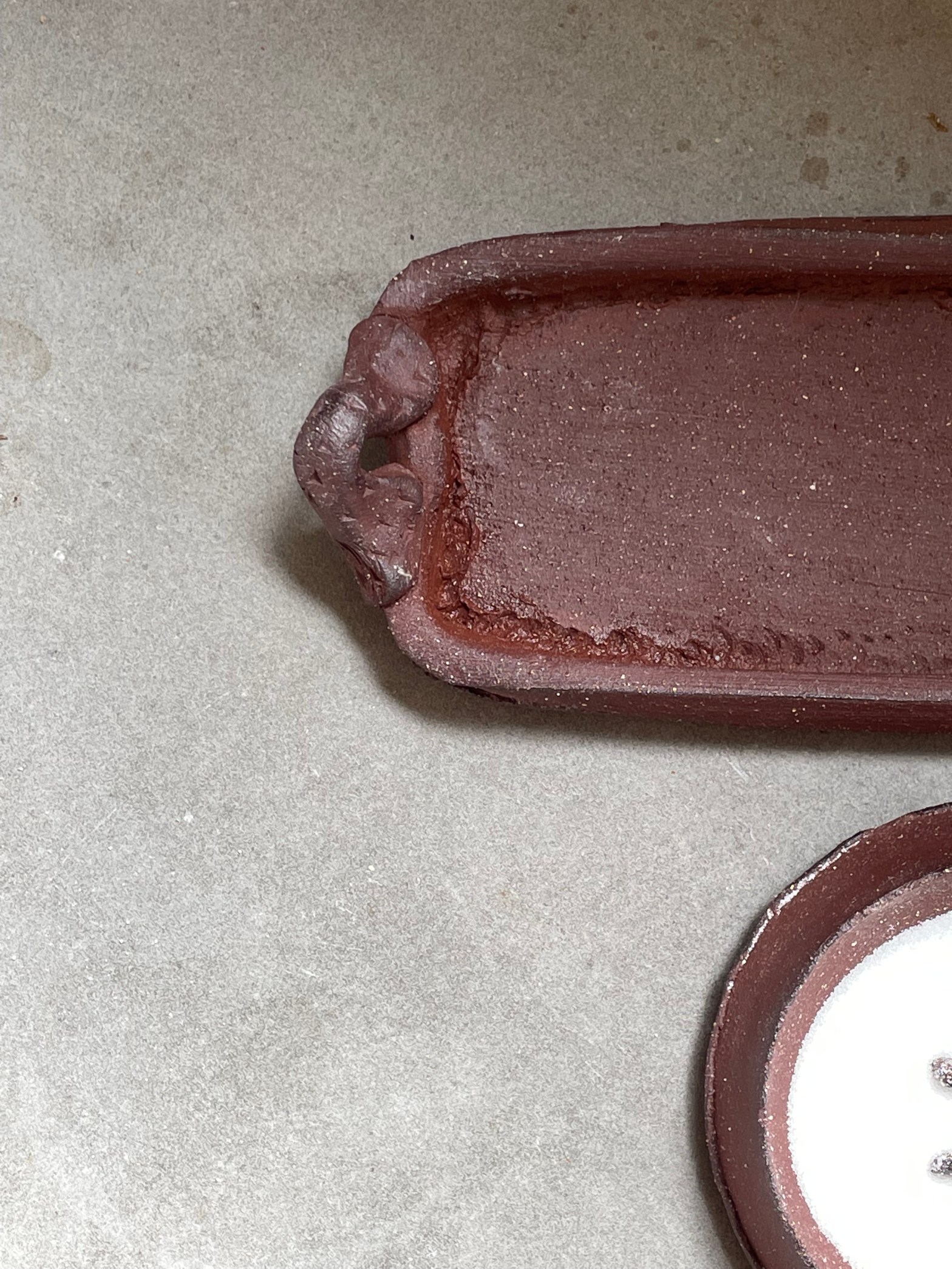
Successful pots all start with clay. But clay suppliers have a vested interest in producing clay bodies as cheaply as possible to maximise profit. Which means in some cases the bodies they supply do nothing for the glazes and the bodies themselves look dull and lifeless – for some reason this seems especially true for the commercially available red stoneware bodies. So I wondered to myself could you just add iron to a body to get the colour you want ? As with all of these things, there is already someone who has researched what you are interested in (more thoroughly than you could ever hope to) – and after a bit of interneting I came across a wonderful thesis by Floyd Udenberg written in 1973 (https://conservancy.umn.edu/items/9f43b09f-c6b6-421d-b42c-2d4bf2fb5391)
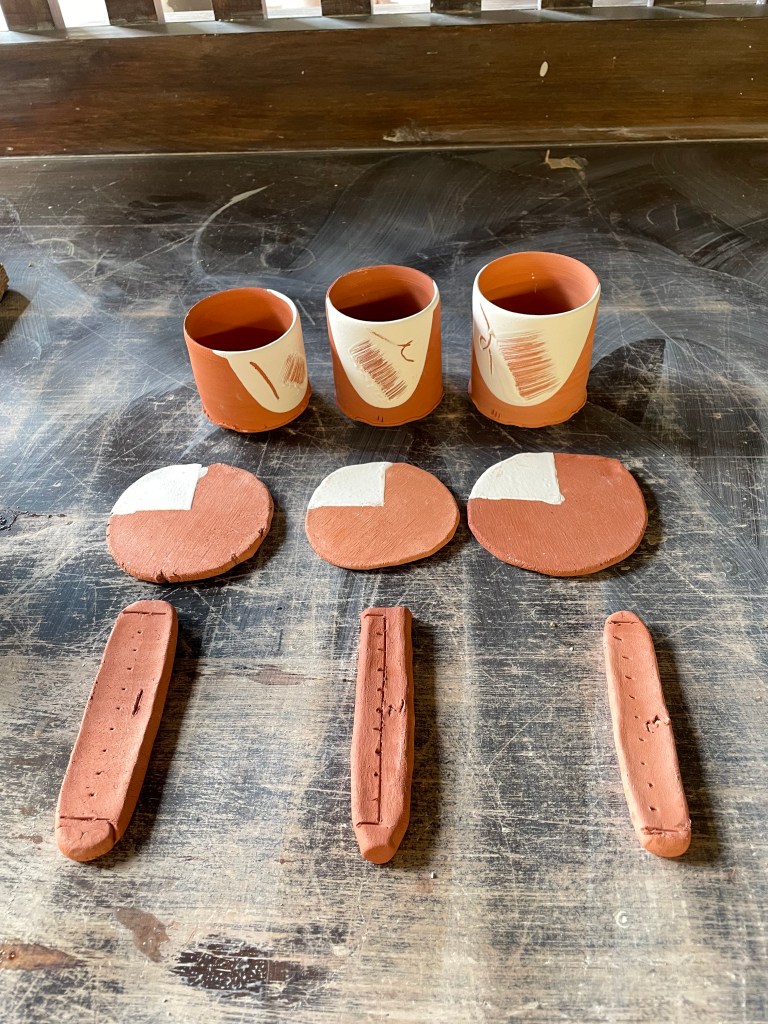
After reading the article I decided to punt on three blends just to see what would come of it. I set out 300g of white dobles clay body, which I had grogged with a mixture of silica sand, coarse molochite and fired grog, and stretched it out as flat and thin as I could. I then popped the iron oxide (or yellow ochre in the most part) on the top, misted it with water until it was just moistened, rolled the whole slab up like a Swiss roll and then kept wedging the clay until the iron was well blended in to the clay – as if you were staining the clay body with a commercial stain. I made a disc to glaze and a little pot, and fired the three tests. Here are the results after bisque firing to 950.
And here they are after firing to cone 10 in an electric kiln
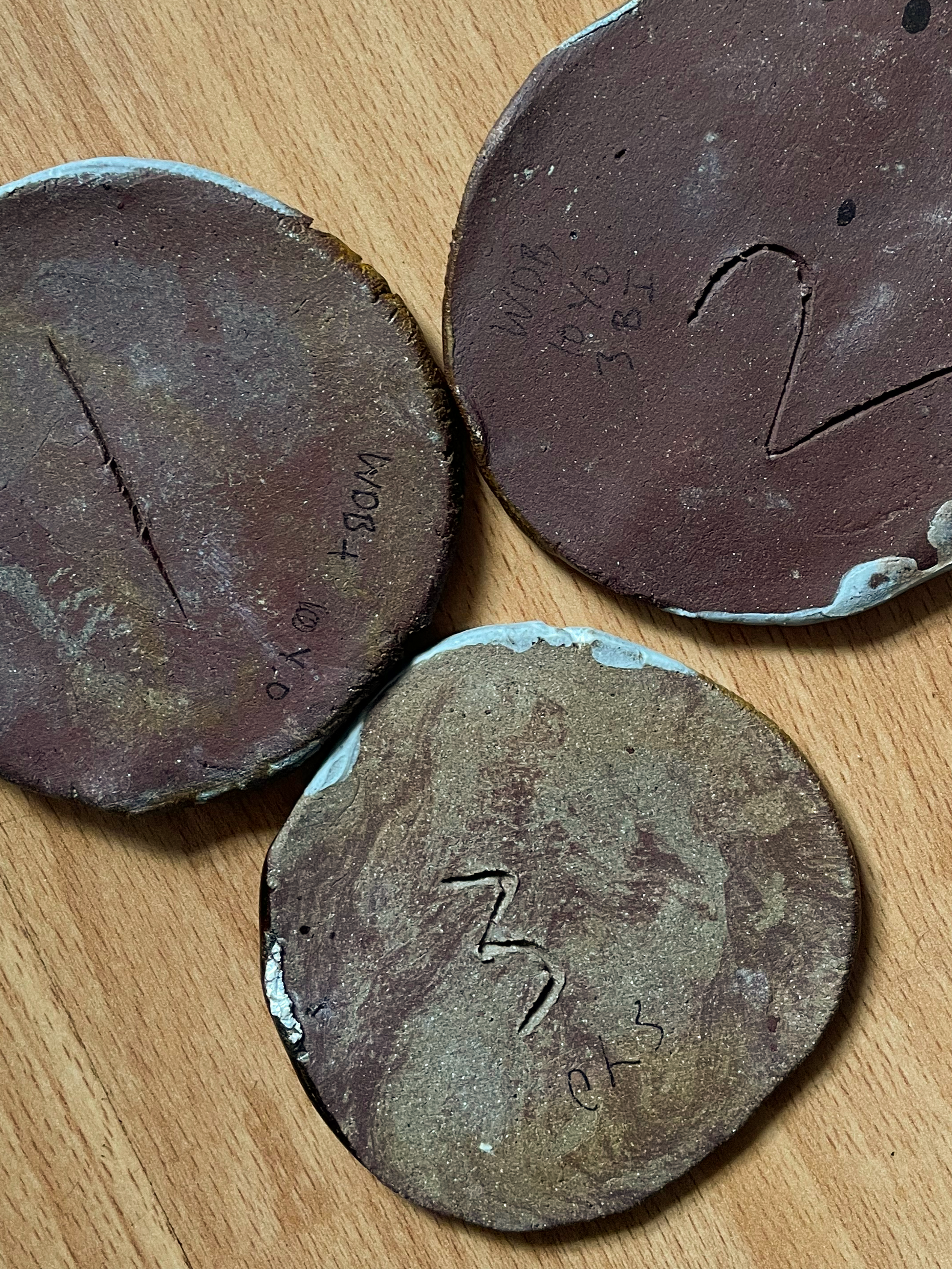
You can see that two of the bodies were poorly blended and so it looks more marbled and the body is a dull sort of grey… I feel like for body one, I was still learning the technique, body two – I had learnt from my mistakes and did it properly, by body three my attention span had let me down and I rushed it… but I really enjoy the deep and lively purple of body two. It’s also interesting how you can’t see the marbling at bisque: it only revealed itself after the final firing. Here are how four glazes sit on each body
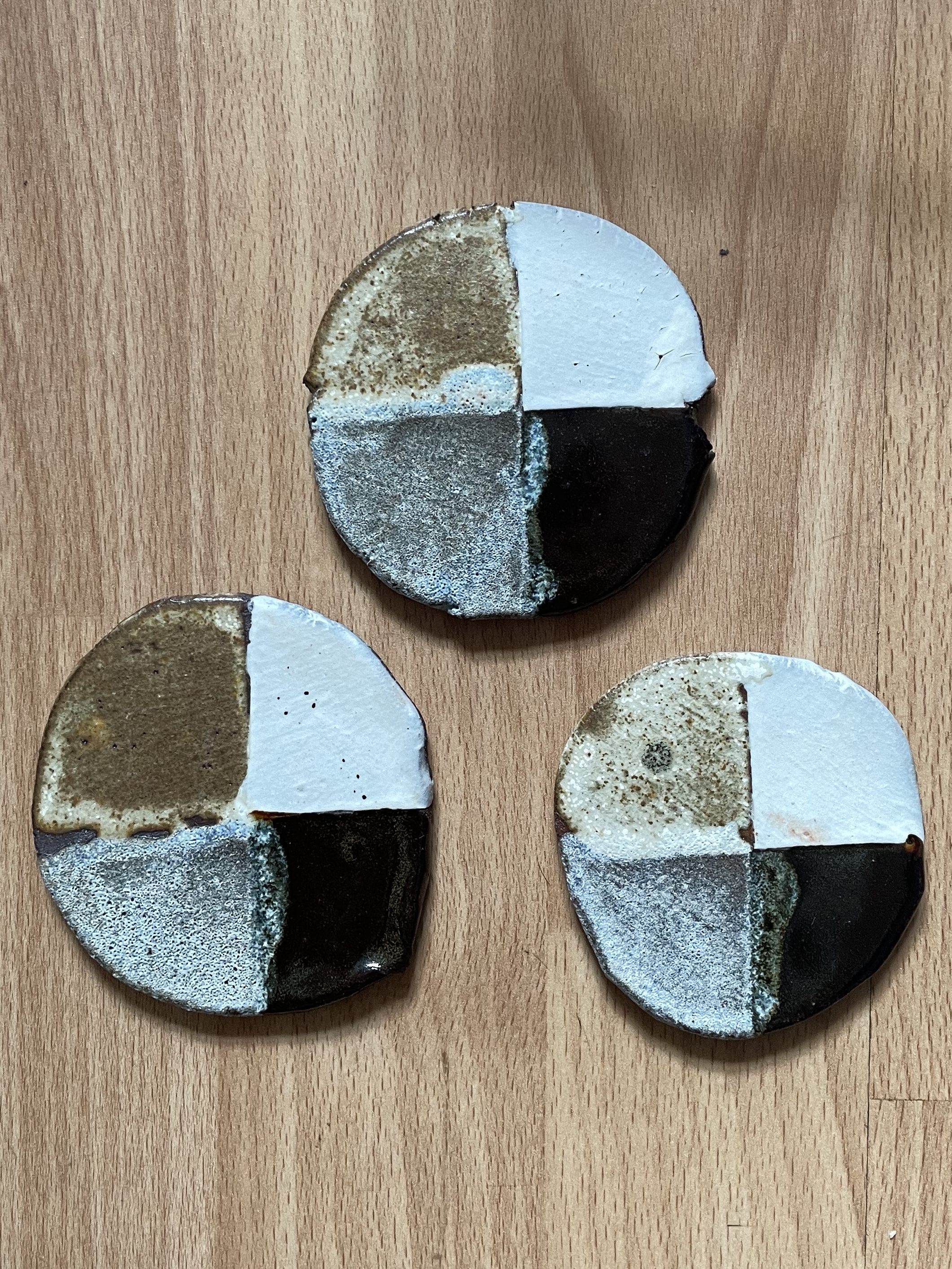
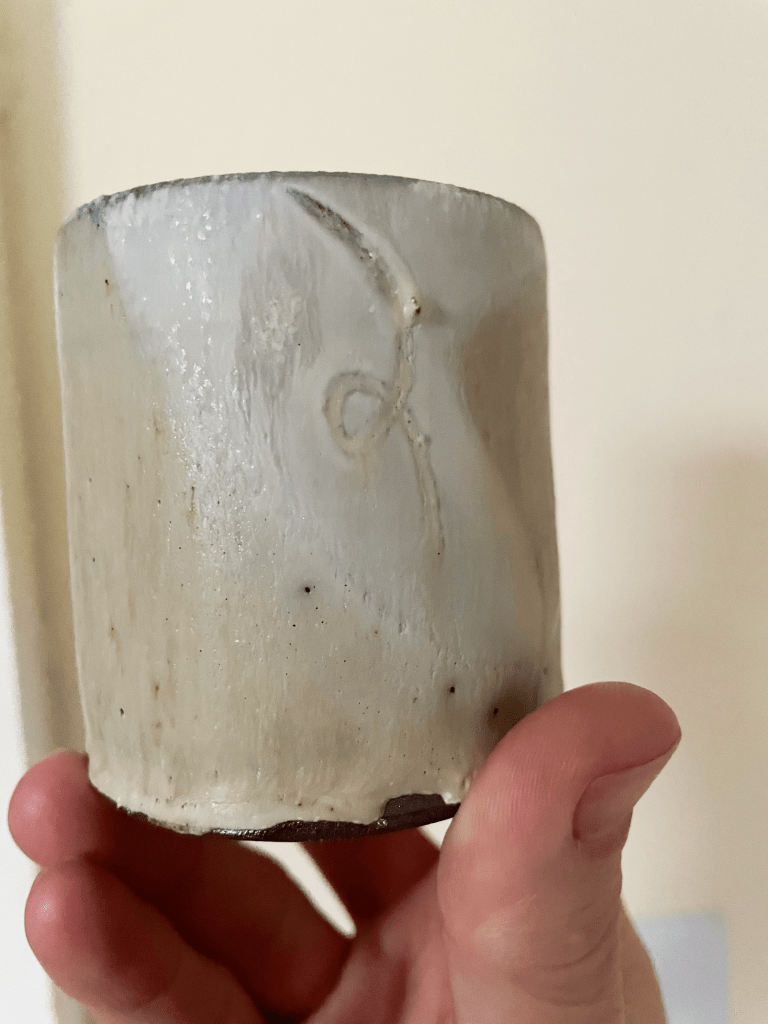
The slips and glazes were all markedly changed by the clay body, but are all very similar to each other across the three bodies. The little beakers with the sgraffito though the slip came out kinda cool – if I only I was better at sgraffito !! I feel like there could have been an interesting avenue for someone more skilled to pursue using the simple combination of a high iron body, white slip, and sgraffito.
I decided that the next thing to do was to make a few pots out of body 2, and see what I could get going. I thought I would just leave them raw, treating the surface as you might for say, salt firing , where every mark and fingerprint is picked up. You have to be very careful making in this way to make sure the surface stays as undisturbed as possible – here are the results.
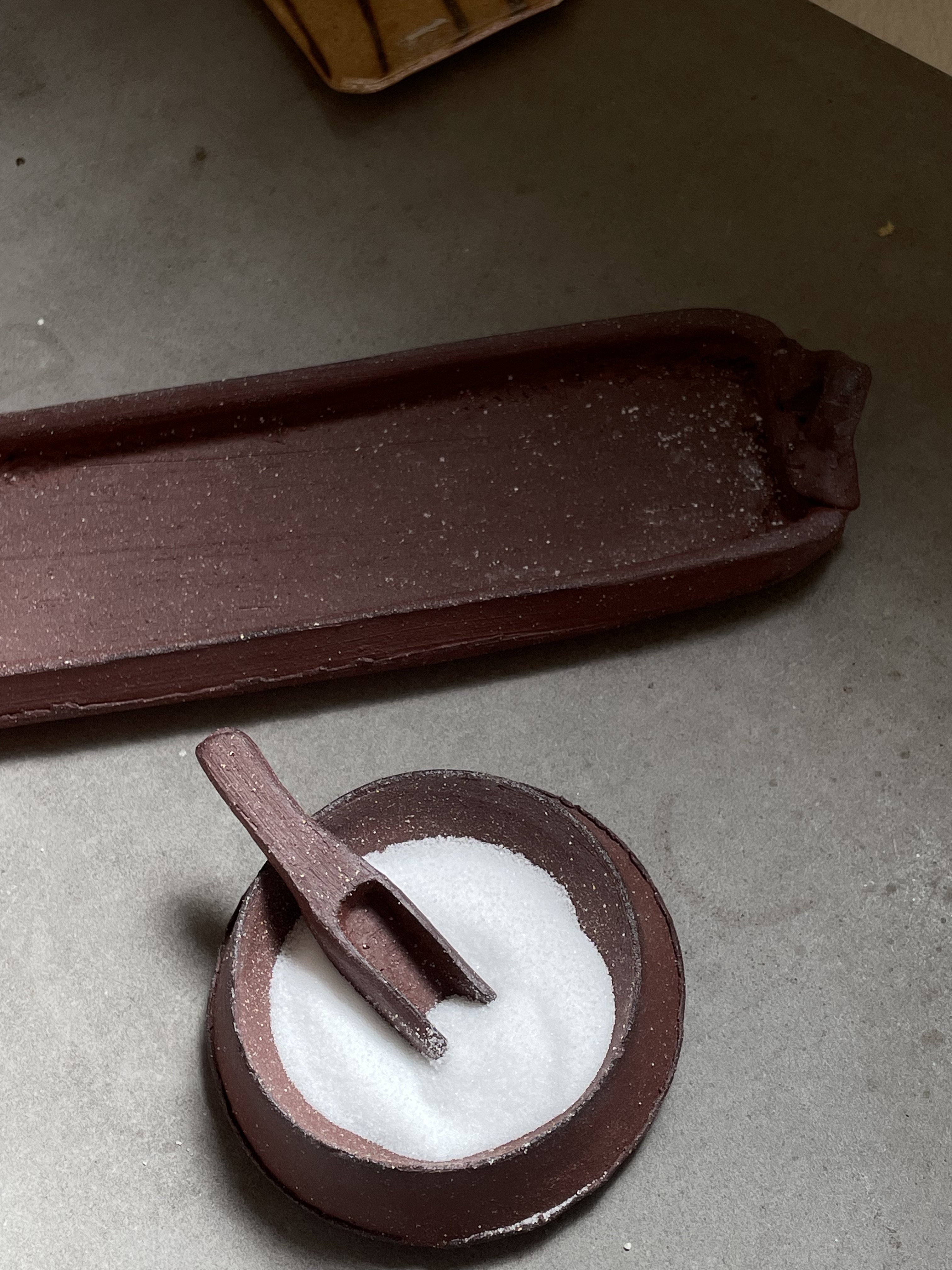
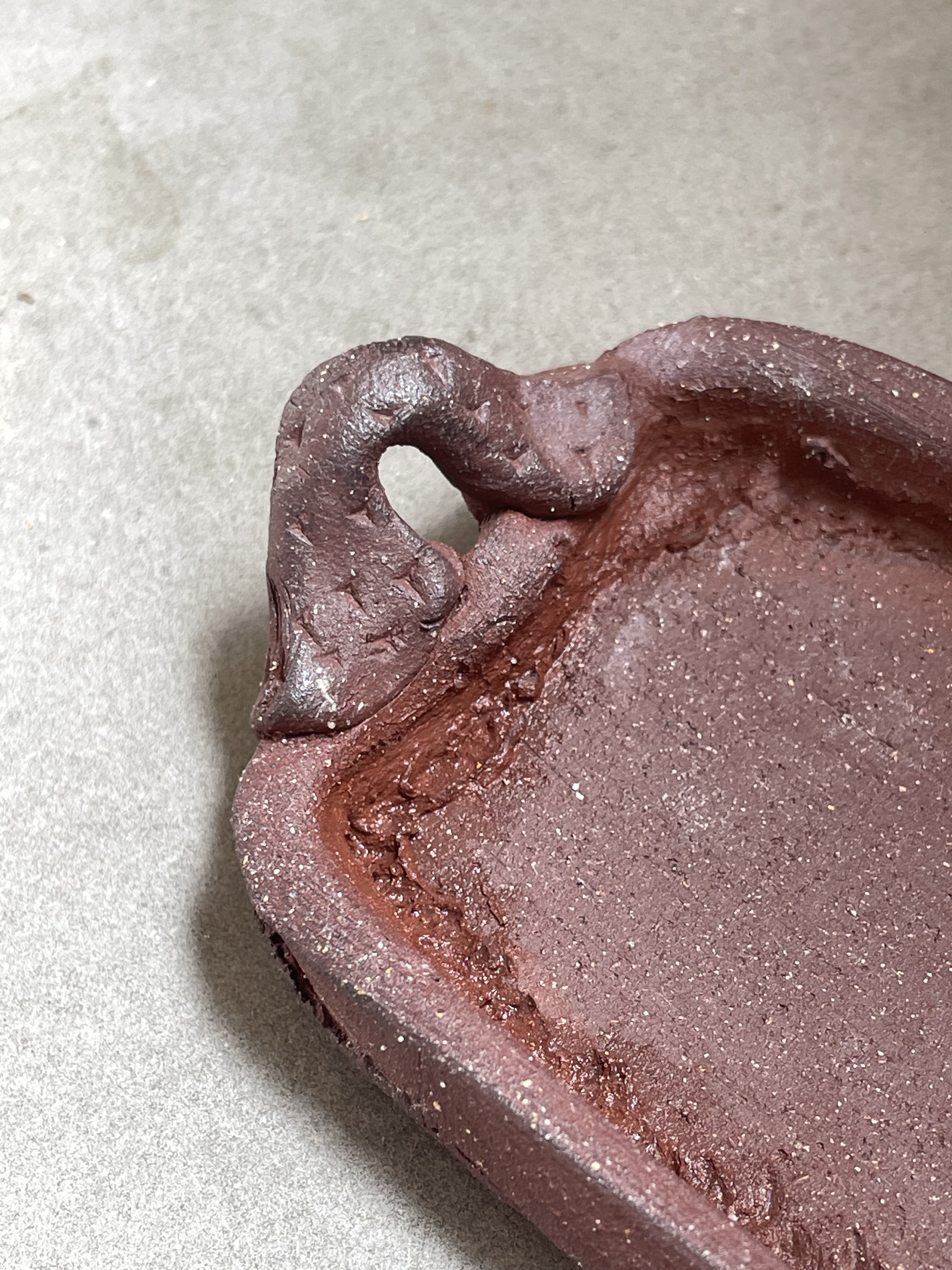
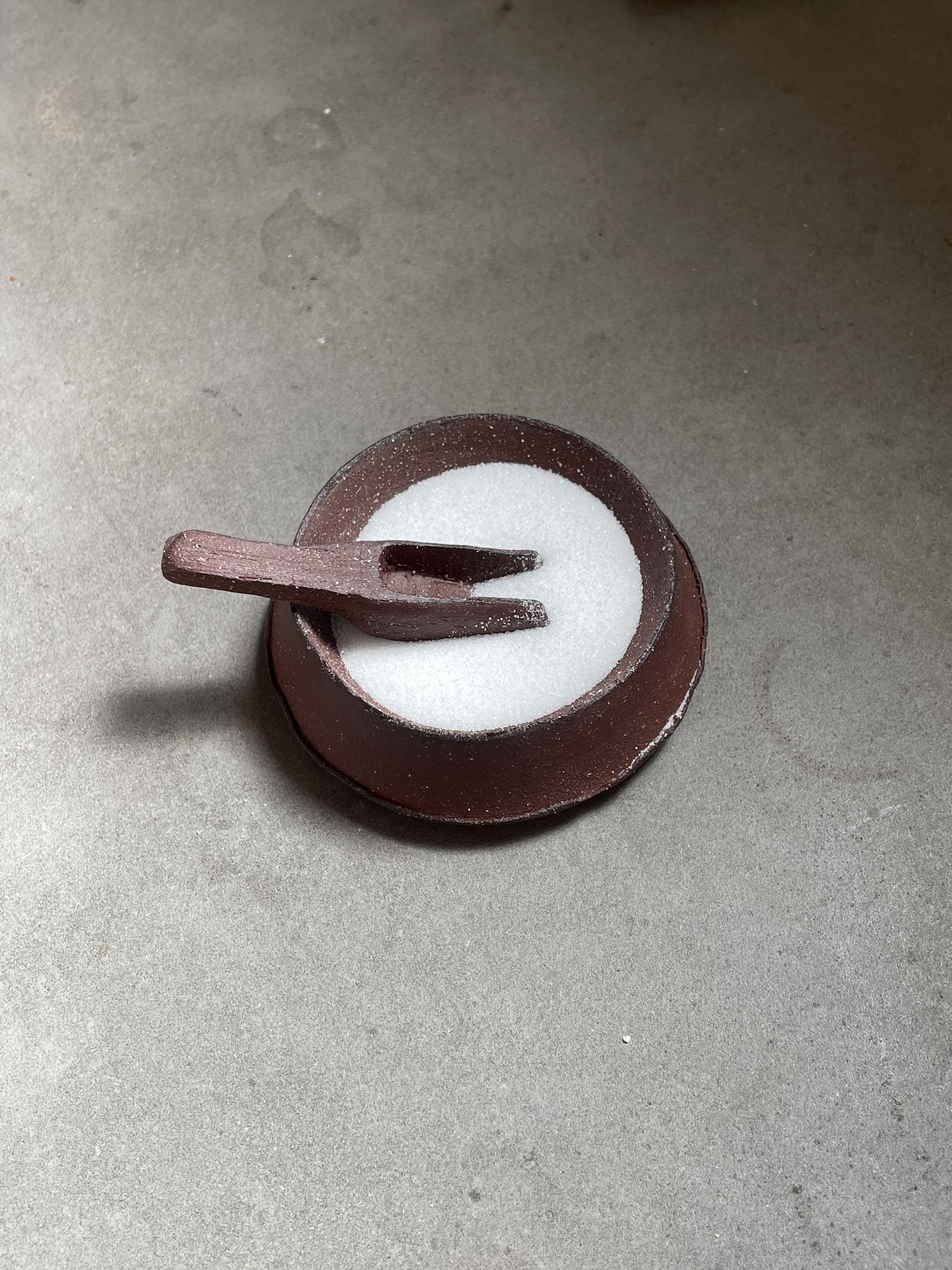
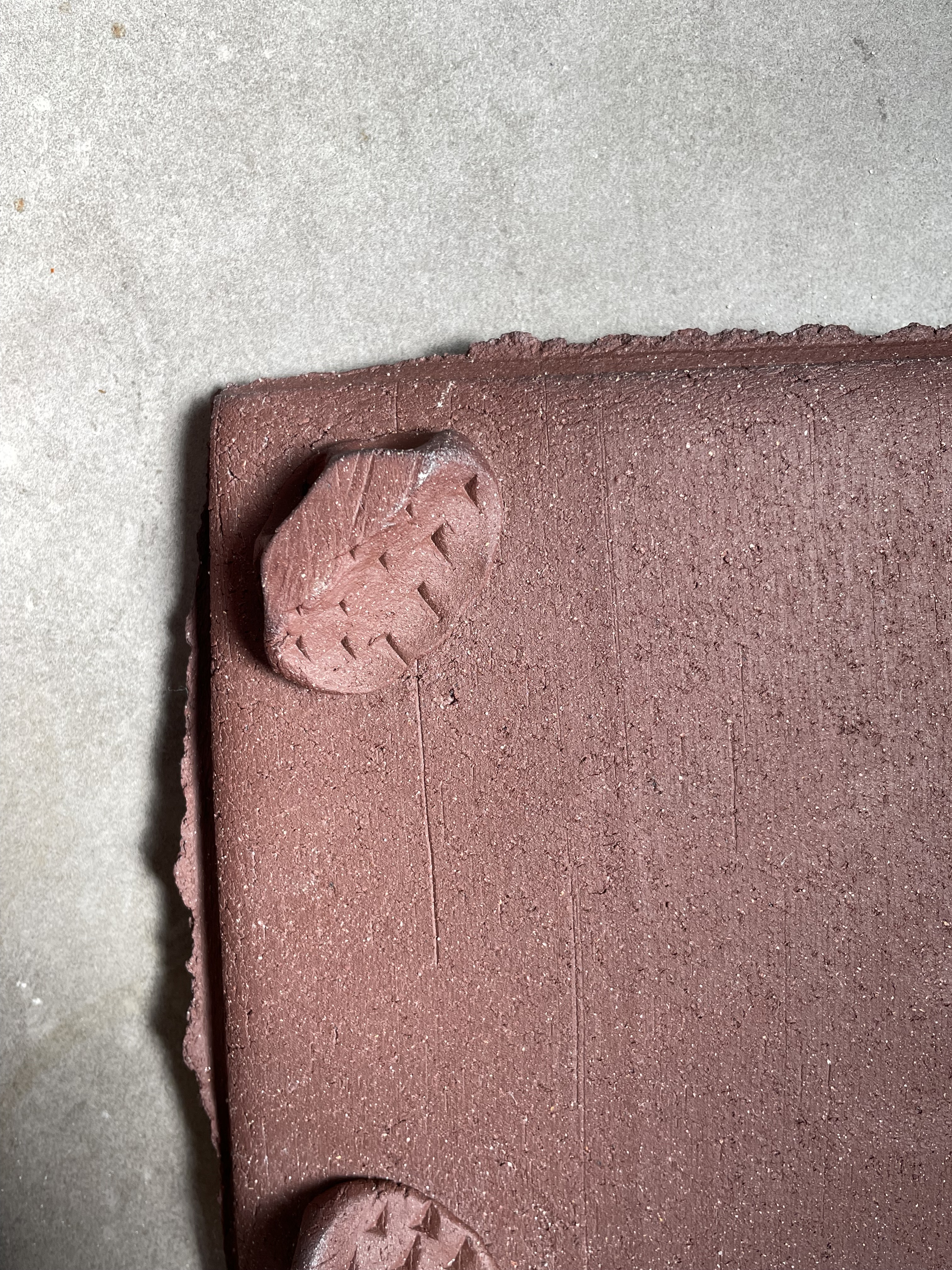
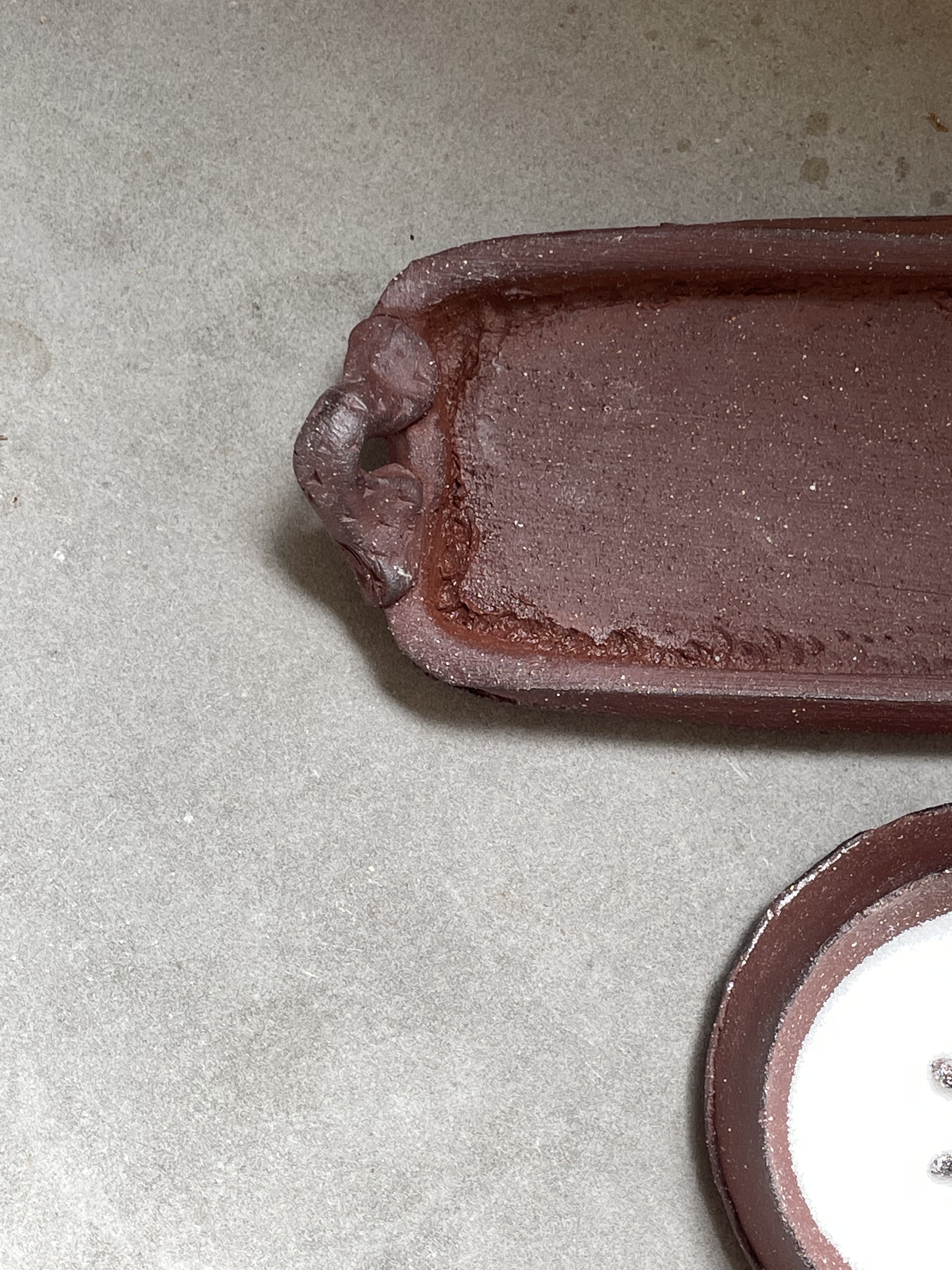
The clay has a tendency to burn out to an even darker purple / black on the exposed edges, giving it such a cool depth which I am really in to. The additions to the clay body to get the rich purple was (As a percentage of the mixed weight of the clay body):
–> 10 Yellow Ochre
–> 3 Black Iron Oxide
Black Iron Oxide seemed to contribute to the richness of the colour, but there would be much experimenting to do to confirm this. I am sure the dedicated potter could carry this research out in a much more systematic way and come across a whole range of wonderful colours for the electric kiln which would liven up work immensely. Needless to say bodies containing this much iron are not suitable for reduction firing – one of the joys we can exploit in electric kilns (or of course for oxidised fuel burning firings for the pedant readers out there)!
The actual processing of the bodies was fairly tedious and so this was as far as I took this particular experiment, instead focusing on iron slips and layering these with iron rich engobes, which I will write about soon.

 Callum Forbes
Interesting, thank you for sharing your thoughts!
LikeLike
Thank you for your kind words!
LikeLike